

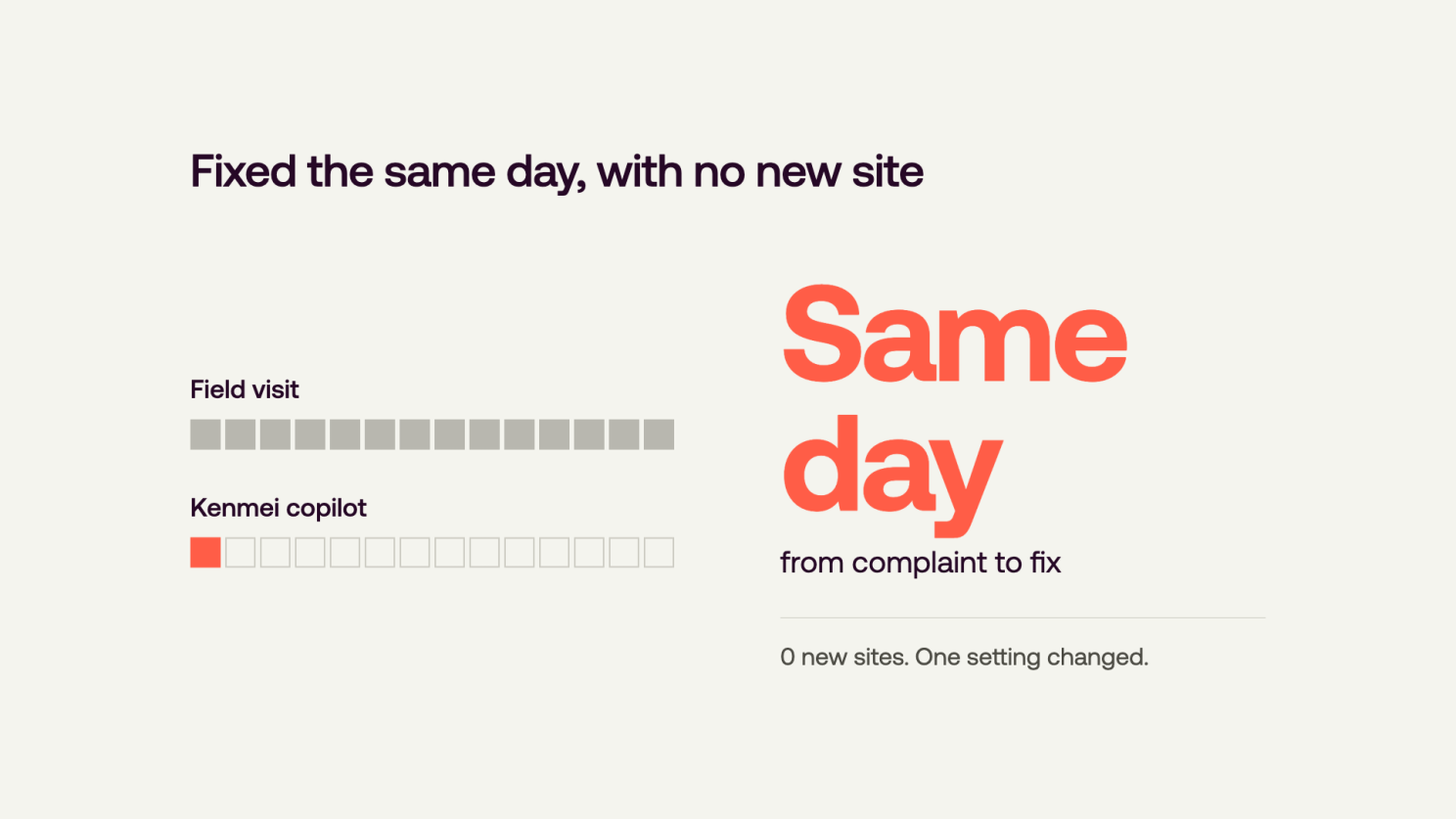
How a Tier-1 operator fixed a business customer's indoor coverage complaint the same day, with no field visit and no new site, after Kenmei's AI agents found the signal was lost entering the building.
A business customer called its mobile operator with a complaint about its offices: the signal inside was poor. It was a big account in a major European city, and it was waiting for an answer.
The usual answer is a field visit.
An engineer drives over days or weeks later and measures one moment, on one network. That measurement rarely shows whether the problem is the network or the building.
So the default answer is a network one, and somebody starts talking about a new site.
One question to the copilot
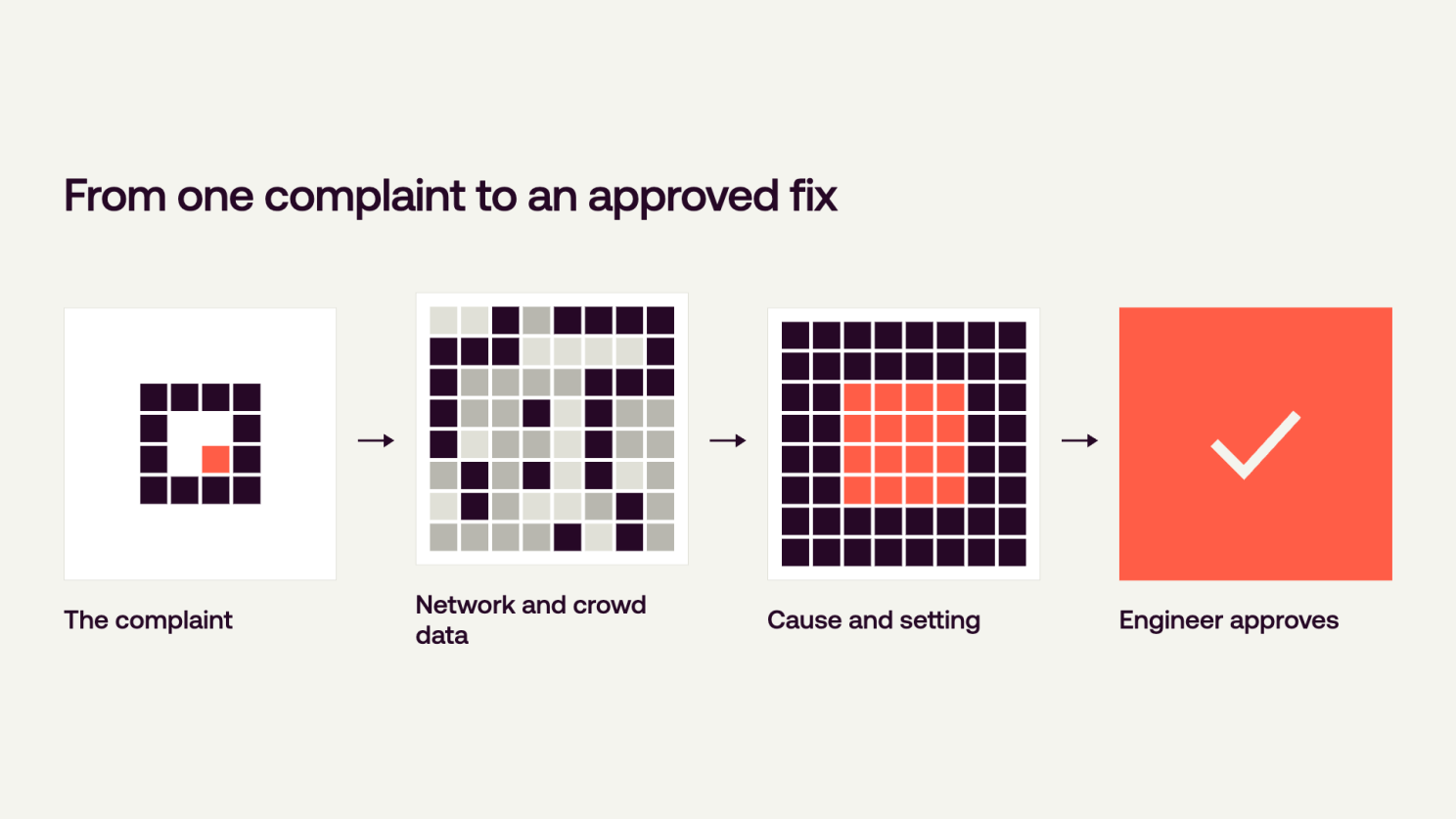
This time the operator's engineer opened the Kenmei copilot and typed the complaint:
"There's a business customer with no signal in its offices, at this address. Tell me what you see."
Kenmei's AI agents gathered the data.
From the operator's network they took the traces, counters and configuration of the cells around the address. From crowd measurement apps they took radio measurements from phones in and around the building, on every operator's network.
Every device was anonymous, results were aggregated by area, and no single customer's phone was used.
The street was fine
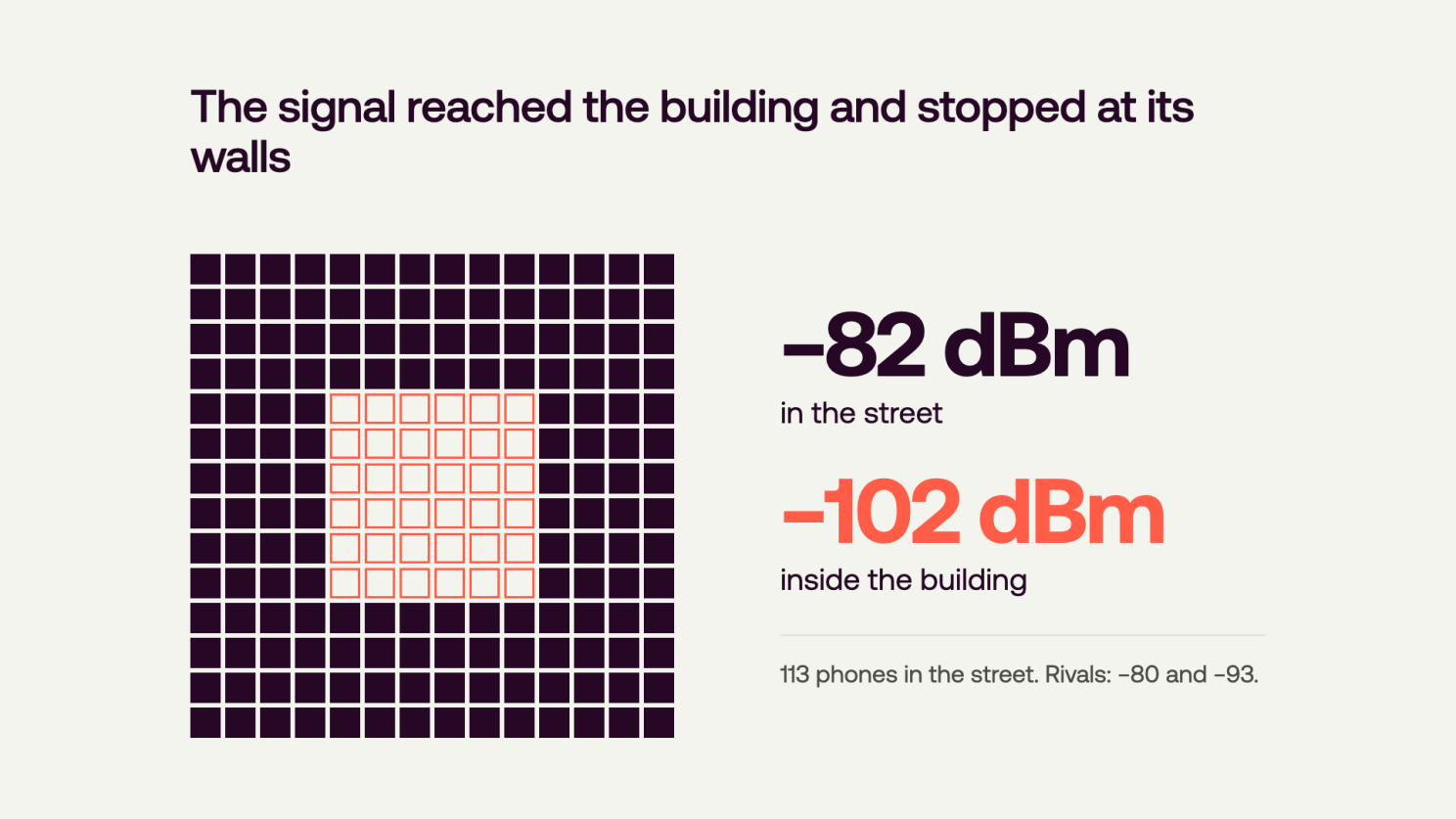
Outside, the network held. 113 of the operator's phones within 50 metres of the building measured around −82 dBm, a good signal. The rivals measured in the same streets got similar results: −80 dBm for one, −93 for another.
Inside, the signal dropped to −102 dBm, against −88 just outside the building, 174 metres from the site that serves it. Coverage reached the building and stopped at its walls.
One setting, no new site
The agents also found a way in. The operator's low band, 700 MHz, crosses walls better than the higher bands, and indoors it was 12 dB stronger. Yet phones inside used it only 8% of the time.
The fix was layer priority, a network setting that tells phones which band to prefer.
The copilot returned the cause, the cells and the setting to change. The engineer reviewed and approved it, the change went through the operator's own systems, and the fix was live the same day.
Then the agents measured the building and the street again to check the signal indoors.
What it changes for every complaint
A field visit costs an engineer, a van and an appointment, and it records one moment on one network. Here the answer came from data that was already there: the street, the building and every operator, all measured the same way.
The business customer had its complaint fixed the same day instead of waiting weeks. For the operator, the complaint ended with a setting change and no new site, decided by its own engineer.
The full case, with every number, is on our customer complaints use case page.